The short answer
Both use an electric steam generator outside the room to boil water and pipe steam to an outlet. The difference is the brief:
- A steam shower is a shower enclosure with steam added. The same space is used for showering and for steam, sessions are usually short, and the room must dry quickly so the bathroom does not stay wet.
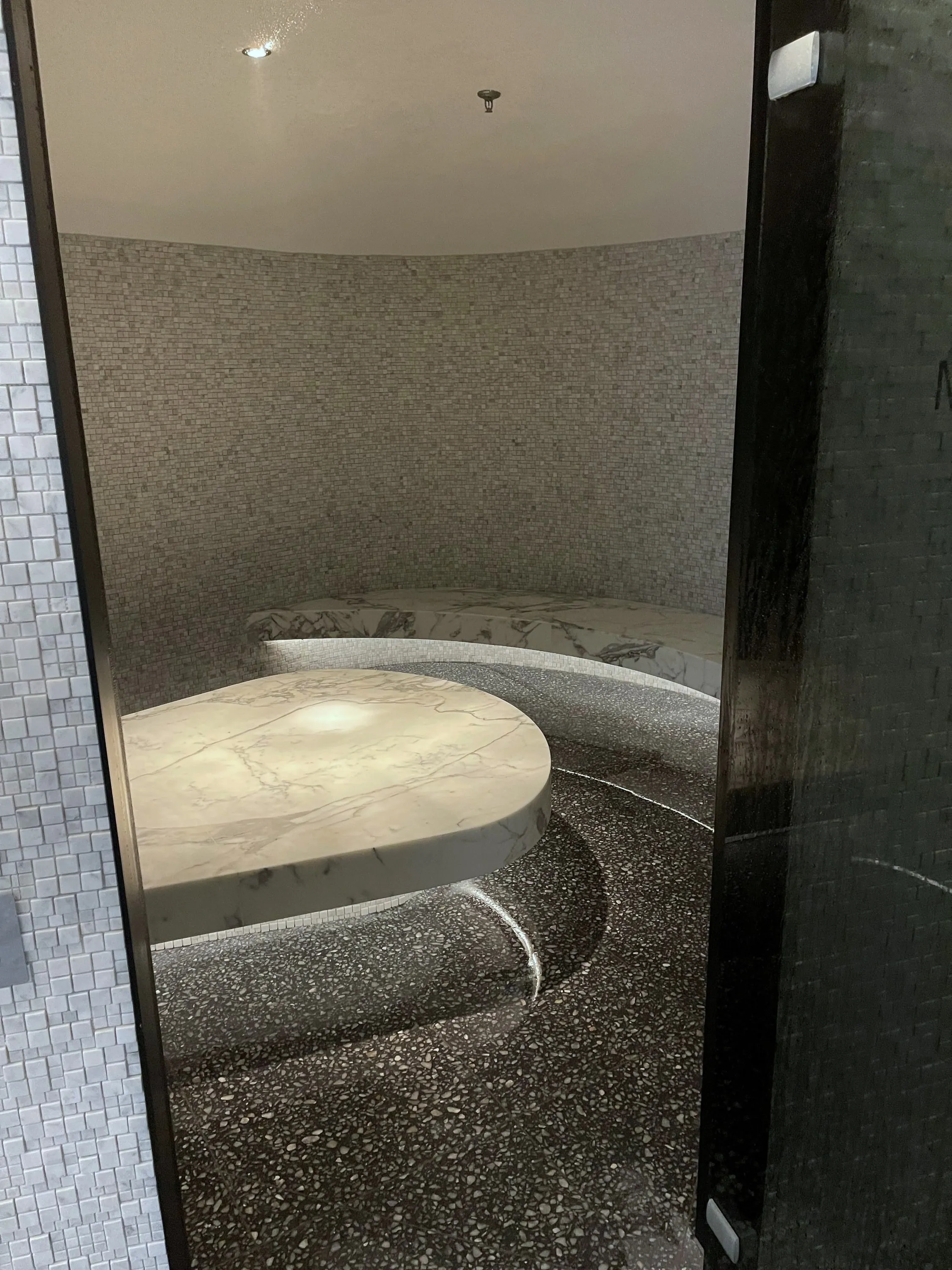
- A steam room is built for steam alone. It is planned around sitting through a session, often for more than one person, with seating, outlet, sensor, drainage and lighting designed together.
Everything that makes steam work applies to both: a full enclosure, waterproofing rated for vapour, a ceiling that sheds condensation, a generator sized for the room and its finishes, and a plant location that can be serviced. Our steam room design and construction guide covers those in detail. This guide focuses on where the two differ.
Side by side
| Steam shower | Dedicated steam room | |
|---|---|---|
| Purpose | Showering every day, steam occasionally | Steam sessions; showering elsewhere |
| Enclosure | Full height, including a closed top and a door that holds steam. A standard screen with an open top does not work. | Fully enclosed walls, ceiling, floor and door |
| Waterproofing duty | Rated for intermittent steam use | Rated for continuous steam use. At least one membrane manufacturer requires a denser, lower-permeance product for continuous-use steam rooms than for steam showers. |
| Ceiling | Sloped or curved so condensation runs to the walls, not onto the bather | The same, usually with more area to plan. Harvia asks for a curved ceiling or a slope of at least 15°. |
| Seating | A fold-down or small fixed seat, if any | Formed or tiled benches planned with the outlet, sensor and drainage |
| Size and users | Usually one or two people | Sized to the number of users; larger for commercial facilities |
| Generator sizing | From the maker’s table for the enclosure’s volume and materials | The same method. Heavier finishes such as stone or tile on masonry need more output. |
| After use | Must clear quickly, because the bathroom is used straight away | Dried after each session to suit the selected system |
The enclosure decides most of it
Steam that escapes is heat and moisture the generator has to replace, and it condenses on surfaces that were never designed for it: plasterboard, paint, joinery and ceilings outside the enclosure. That is why every manufacturer we reviewed expects a fully enclosed room, and why an existing shower can rarely be converted just by adding a generator.
For a steam shower, the enclosure usually means a glass or tiled roof over the shower, full-height glass with a door that seals or closes to the generator maker’s requirements, and a ceiling shaped so drips run away from the bather. For a steam room, the same principles apply to a larger, purpose-built room, where the door approach (a gasketed seal or a deliberate gap with planned ventilation) follows the selected generator’s instructions.
Waterproofing is rated for the duty
Shower waterproofing is designed to stop liquid water. Many shower membranes let water vapour pass through, which is fine in a shower but not in a room that holds saturated air for a whole session. A steam room needs a continuous low-permeance vapour-control system across walls, ceiling and floor. Membrane makers rate their products for the duty, and the continuous-use rating for steam rooms is stricter than the intermittent rating used for steam showers.
Check the system, not just the tile
The waterproofing system, board, adhesive and grout should be confirmed together for steam use, in writing, with the system manufacturer. The tile you see is the last layer, not the first.
Generator, outlet and plant location
The generator is sized from the selected brand’s own tables, using the room’s volume and how quickly its finishes warm up. Glass keeps losing heat outward, and dense stone or tile on masonry absorbs heat before the room reaches temperature, so both need more output than a light, insulated shell. Our steam generator sizing guide explains how.
In both cases the generator sits outside the steam space, in a dry, ventilated, accessible position close by, with a drain for flushing. Harvia limits the air temperature around its generators to 30 °C, which Queensland roof spaces can exceed, so the plant location needs planning early. See steam generator location and service access.
Living with it
- Water quality. Hard or untreated water leaves scale in the generator. Both types benefit from suitable filtration or treatment and regular flushing, as covered in our water quality guide.
- Cleaning and drying. A steam shower is cleaned like a shower but must dry fast. A steam room is cleaned and dried after use as the steam room cleaning guide describes.
- Materials. Harvia states that wood and other organic materials should not be used inside a steam room, and advises avoiding porous natural stone. The same caution applies to a steam shower.
Choosing between them
A steam shower suits a bathroom where steam is an occasional extra and space is tight. A dedicated steam room suits a home where steam is the purpose of the space, more than one or two people will use it, or seated sessions matter. Commercial facilities are designed as dedicated steam rooms for continuous use. Either way, decide early: the enclosure, waterproofing, ceiling and plant location are fixed in the structure, long before the tile goes on.
BSC Wellness designs, supplies and builds dedicated steam rooms for homes and commercial facilities, and is the Queensland agent for Harvia, whose steam generators we specify and support. See our custom steam rooms, home steam rooms and commercial steam rooms.