TH7 Noosa
Sauna · Steam · Infrared · Commercial
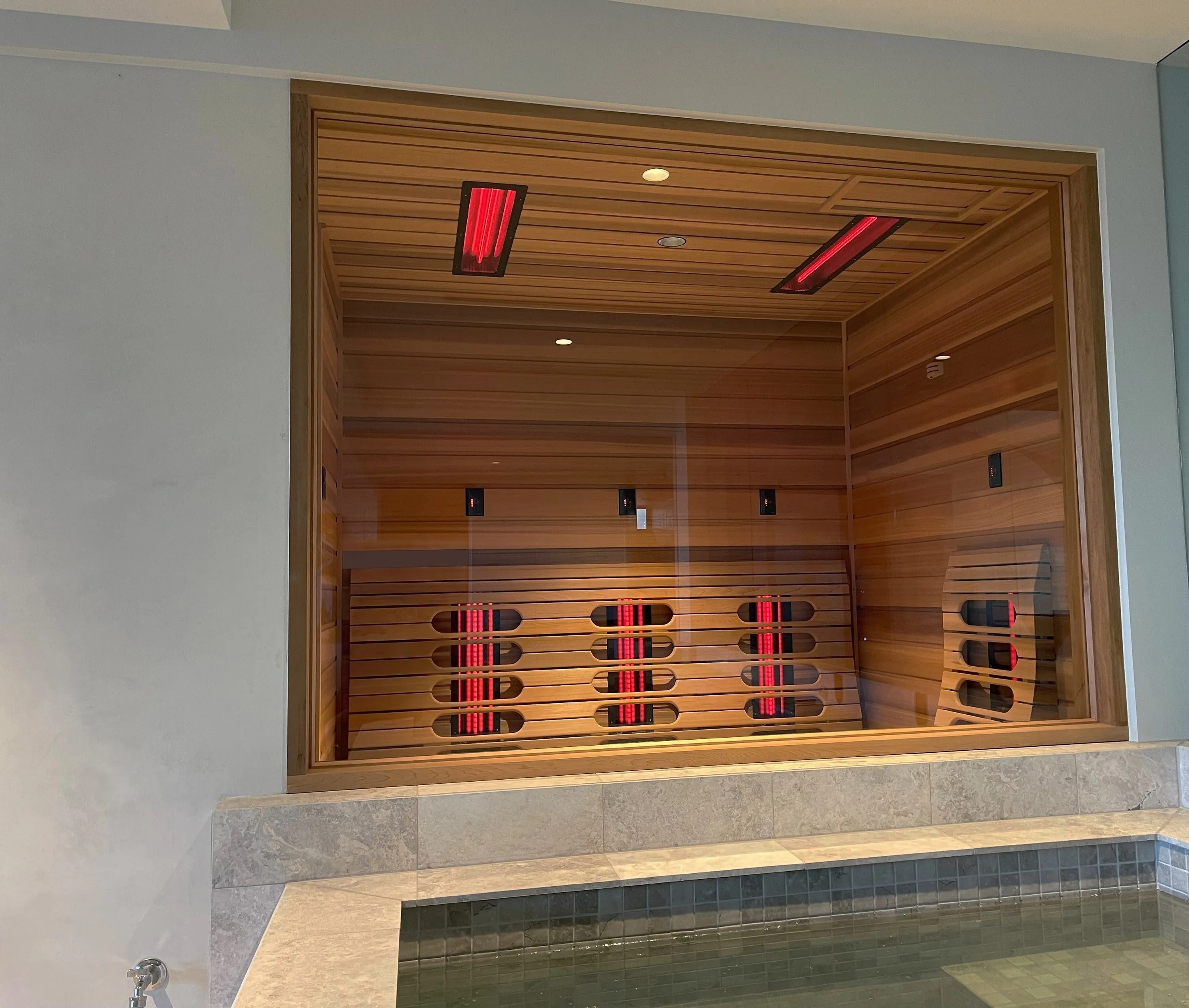
Infrared rooms designed and built into homes and wellness facilities, with the emitters, timber and light resolved together.
What it is
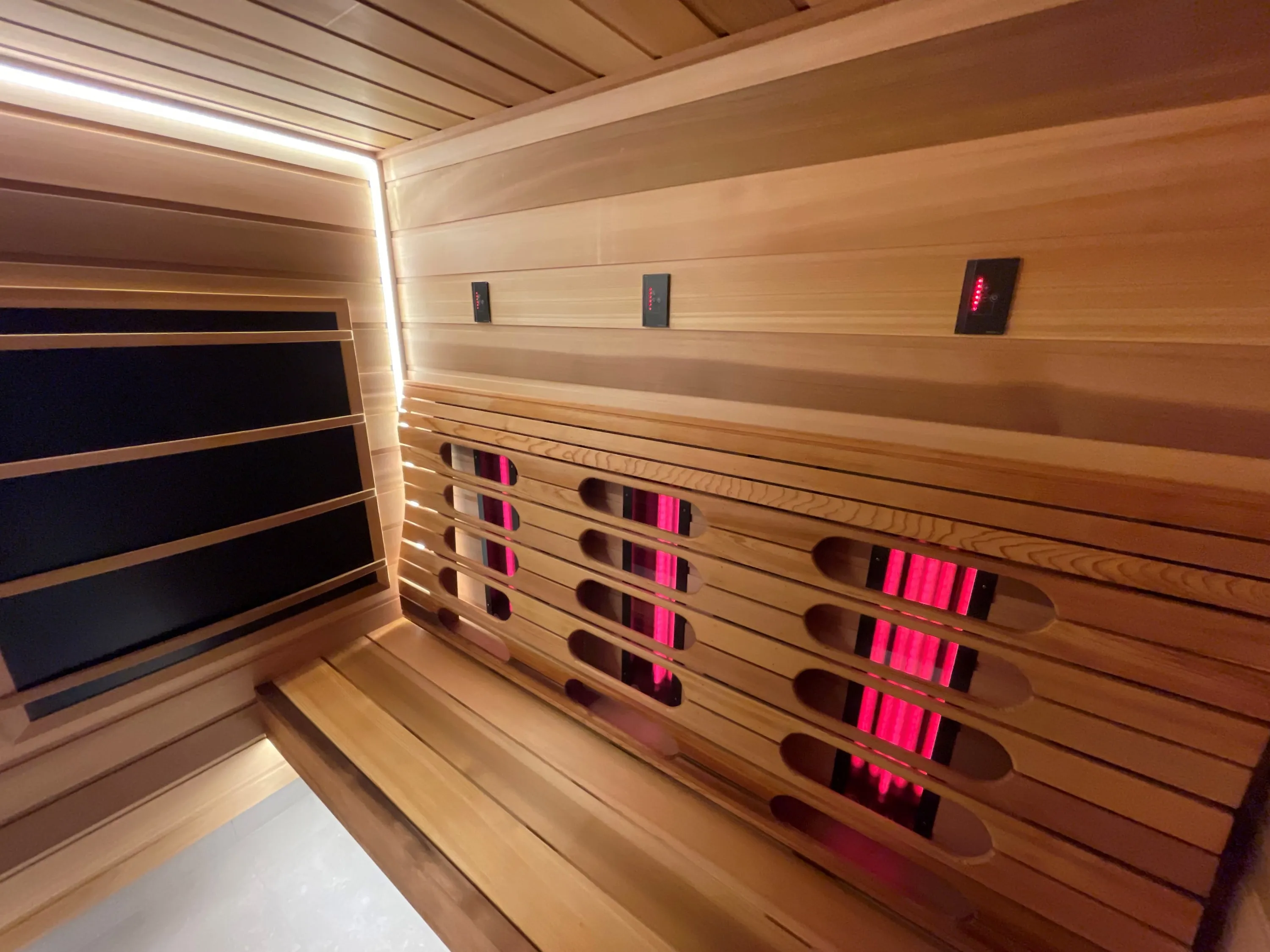
An infrared sauna uses emitters, usually set into the walls and behind the backrests, that radiate warmth directly onto the people in the room. The air stays far cooler than in a traditional sauna, and the room is ready quickly.
Many people enjoy it for exactly that: a long, gentle session without the intensity of a hot Finnish sauna. Others want both, which is what a hybrid sauna offers.
Compared with traditional
Infrared emitters radiate warmth directly onto you and the surfaces around you. A traditional sauna heats stones and the air.
Infrared rooms are usually set somewhere around 40–65 °C, well below a traditional sauna, though the warmth from the emitters makes them feel hotter than that.
Emitters reach full output quickly, so an infrared room is ready sooner than a traditional sauna, which needs time to heat its stones and air.
There are no stones to throw water on, and water must never reach the emitters. If you want steam bursts, consider a traditional or hybrid sauna.
Design
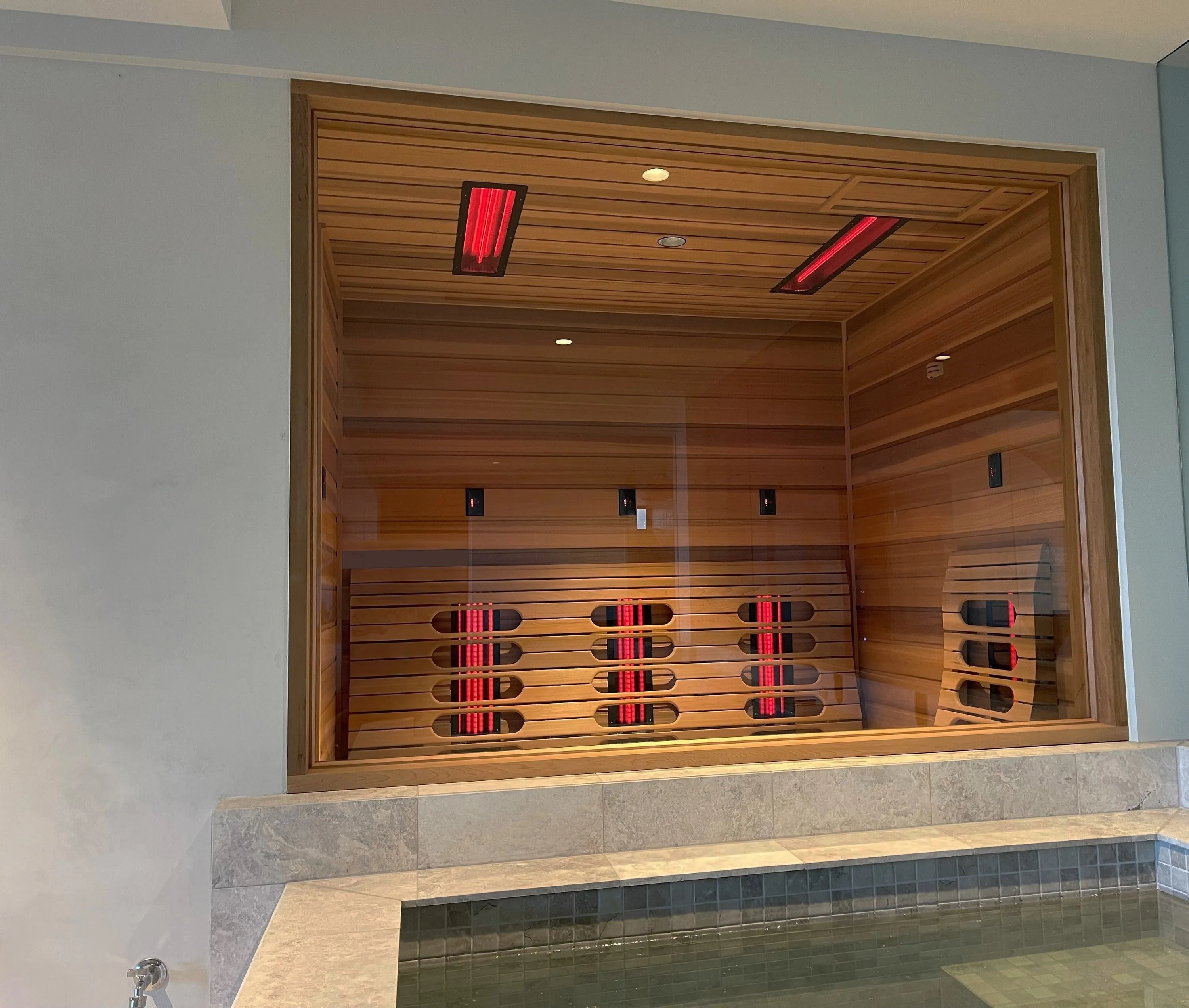
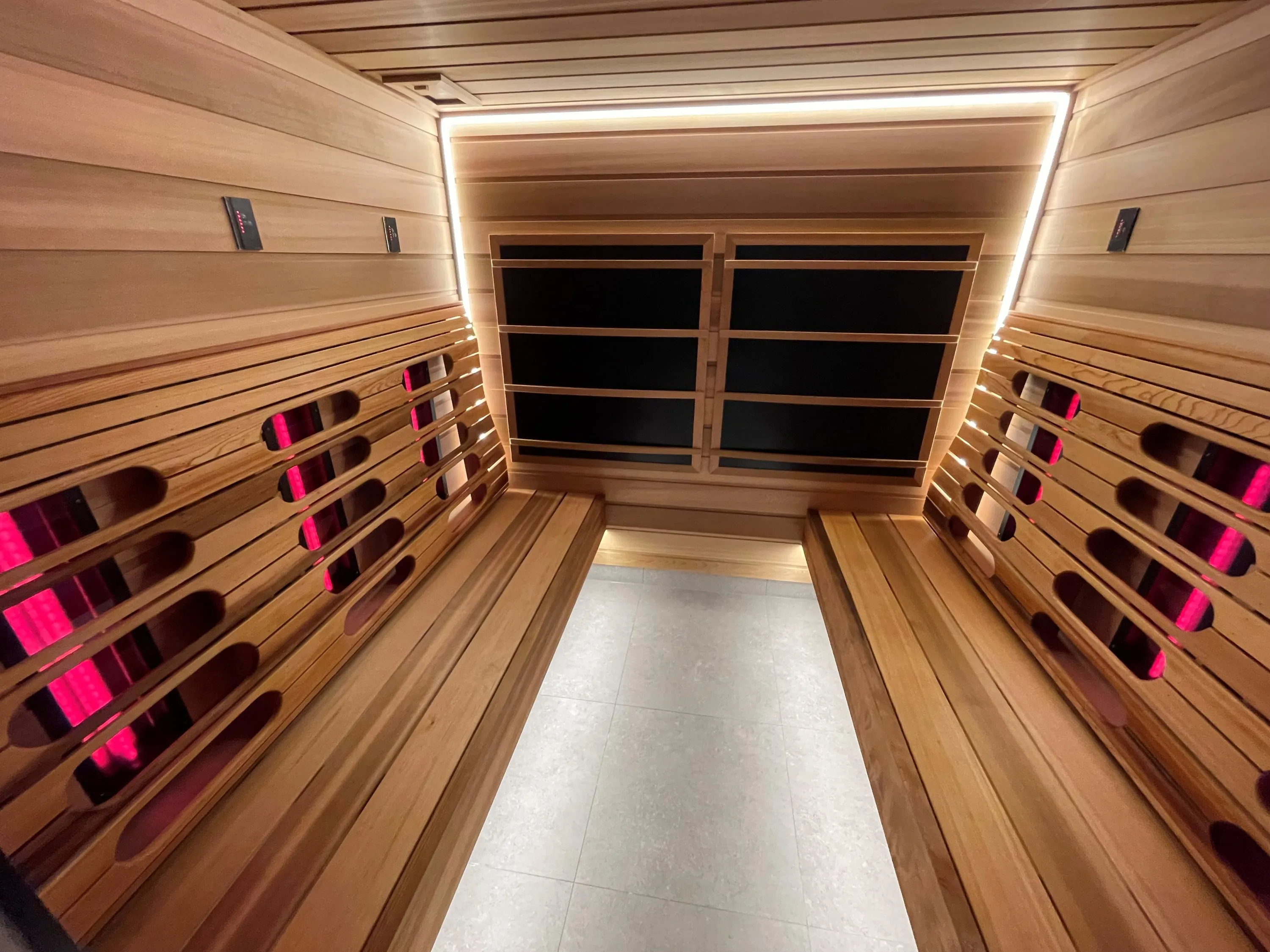
An infrared room is only as good as the position of its emitters. We plan them around the benches and how people sit, guard them behind timber, and keep wiring and controls neat and serviceable.
What we design
Emitter types differ in output, surface temperature and how they are mounted. We choose them for the room and how it will be used.
Emitters work best positioned for how people sit, following each maker’s rules. For its VitaMy radiators, for example, Harvia recommends the 350 W model behind the back, no closer than 4 cm and stopping at neck height, and front radiators at least 50 cm from the body with the top edge below eye level.
Emitter surfaces get warm. Slatted timber guards and backrests keep them comfortable to lean against.
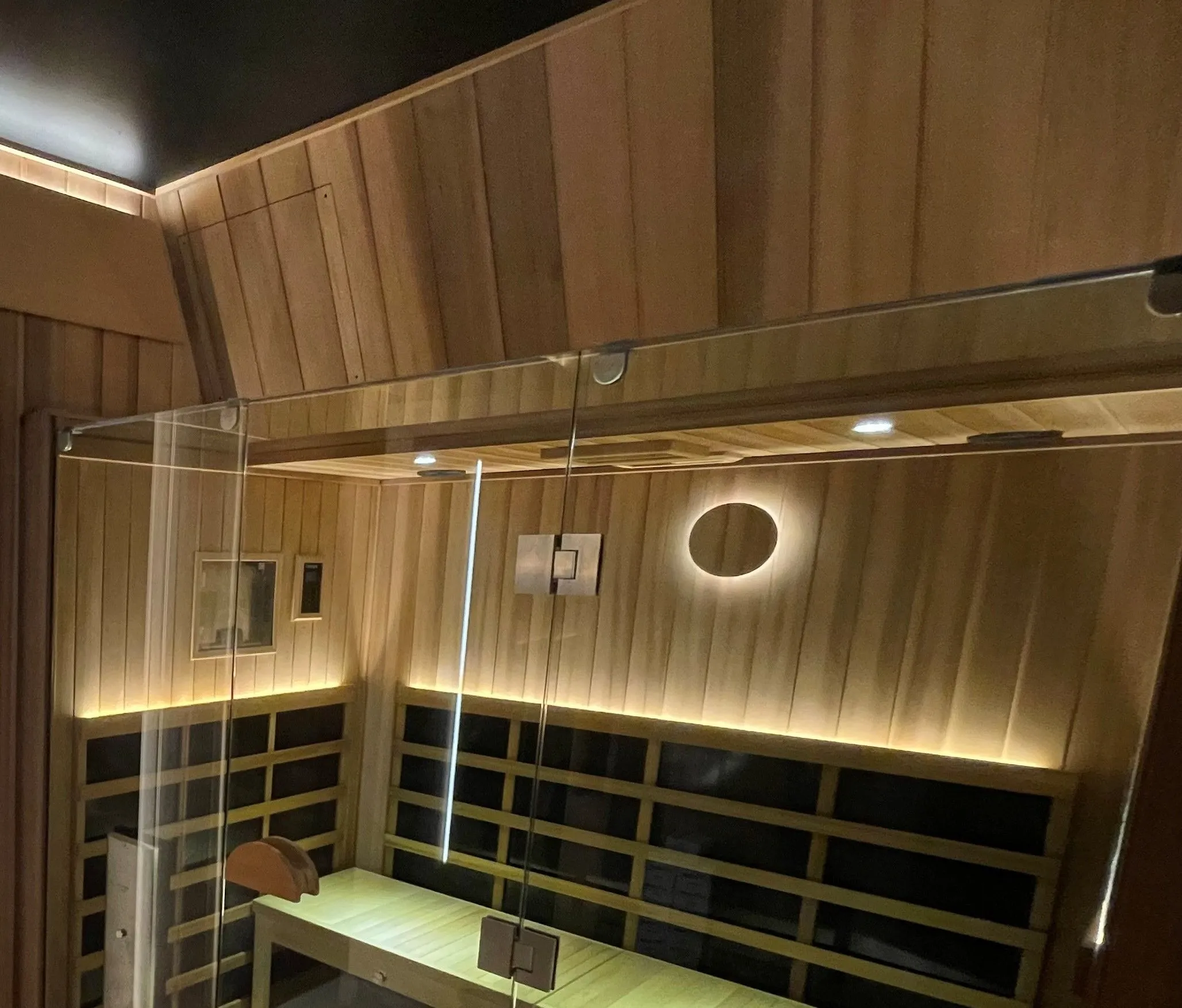
Clear cedar and other stable sauna timbers line the room; glass fronts and concealed lighting are designed in from the start.
A control matched to the emitters, and a dedicated supply designed and installed by a licensed electrician.
An infrared room can be built into the house, like a custom sauna, or supplied as a freestanding cabin.
Questions
A traditional sauna heats stones and air, and you can throw water on the stones for löyly. An infrared sauna uses emitters that warm you and the room’s surfaces directly, at a lower air temperature, with no stones or steam.
Traditional, infrared and hybrid comparedIt depends on the emitters and the control. As a guide, infrared rooms are commonly set between about 40 °C and 65 °C air temperature, well below a traditional sauna.
Sometimes. That is a hybrid sauna: a stone heater and infrared emitters in one room. It needs emitters rated for a hot room, careful placement and a compatible control.
Hybrid saunasThese describe bands of infrared wavelength, and the names are used inconsistently across the industry. We choose emitters on their rating, placement rules and fit with the room rather than on band labels.
Further reading
Tell us about the space and who will use it. We will explain the options, including whether a hybrid room would suit you better.