Alderley Residence
Sauna · Hybrid
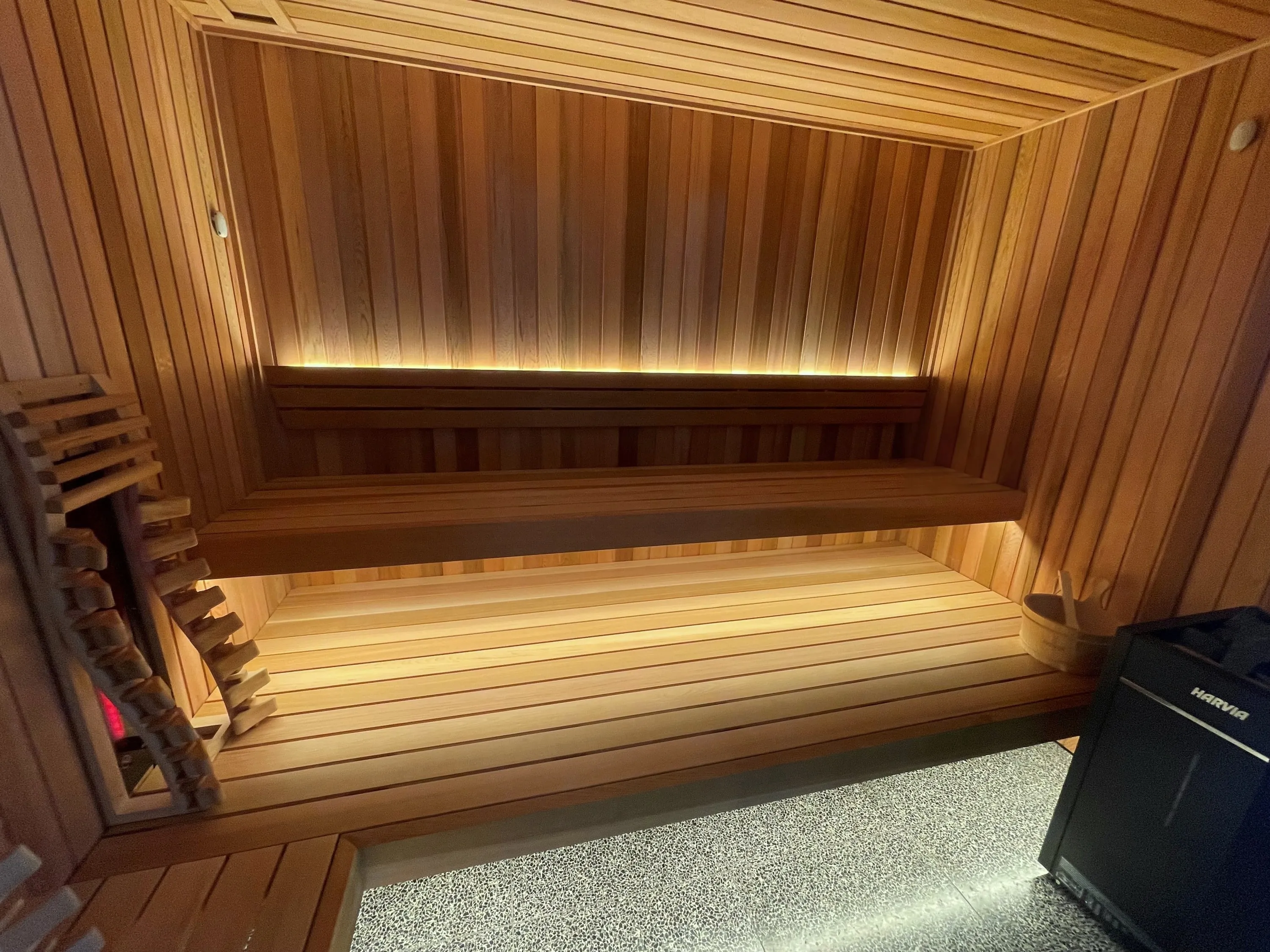
A stone heater for the Finnish ritual and infrared emitters for gentler warmth, designed together so each works as it should.
Why hybrid
Some people love the hot air and löyly of a traditional sauna. Others prefer a lower air temperature and a shorter warm-up. A hybrid sauna lets a household, or a venue, offer both in a single footprint.
Doing it well is a design job. The heater, emitters, benches, controls and electrical supply have to be chosen and placed together, because each one constrains the others.
How it works
A heater warms a mass of stones and the air in the room. Water on the stones gives löyly, a soft burst of humid heat. Heater makers commonly suggest about 65–80 °C (Finnish reference practice runs higher), within the limits of the heater and the controller.
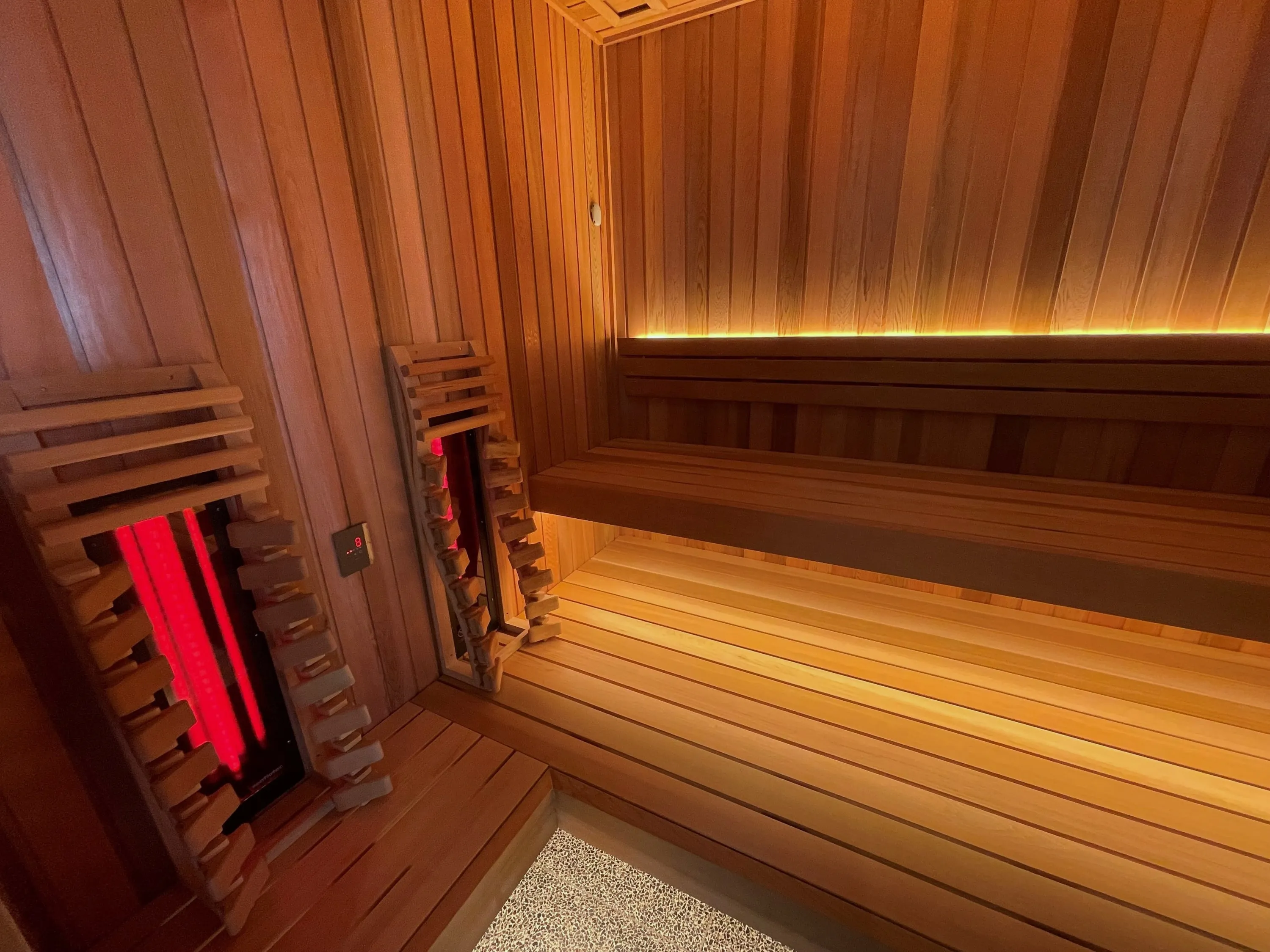
Emitters behind the benches or in the backrests radiate warmth directly onto you while the air stays much cooler, often in the 40s to 60s °C. There is no löyly in this mode, and water must never reach the emitters.
Heater, emitters, lighting and ventilation are planned together. They may run from separate controls or one integrated control. Whether heater and emitters can run at the same time depends on the selected equipment and its instructions, so it is never assumed.
Project
A glass-fronted room set into the joinery of a contemporary home, with a stone heater and infrared emitters sharing one timber-lined space.
What we design
Emitters only work well when they suit how people sit. Back emitters sit close behind the backrest and front emitters further away, so bench heights, depths and backrests are designed around them.
Emitters are chosen for the room they will live in. Panels intended for a hot sauna are rated very differently from those made for a low-temperature infrared cabin, and some must run from a control with an automatic time limit.
Emitters are kept clear of the heater and out of the path of water and steam, with clearances set by the manufacturers of both.
Emitter surfaces get hot. Timber backrests or guards keep them comfortable and safe to lean against.
Separate controls for heater and emitters, or one integrated control with stored profiles. Either way, each part is used as its manufacturer specifies, with sensors placed to read the room correctly in either mode.
A hybrid adds an infrared load to the heater circuit. We give the electrician the loads and locations early, and a licensed electrician designs and installs the supply.
Projects
Questions
In our work, a hybrid sauna is a traditional sauna, with a stone heater and löyly, that also has infrared emitters, so it can be used as a Finnish sauna or for gentler infrared warmth. It is not an infrared sauna. The word is used loosely elsewhere, for "combi" heaters that add humidity, or for infrared cabins with mixed emitter types, so it is worth checking what is meant.
It depends on the selected equipment and its instructions. Harvia describes the heater and panels in its hybrid saunas as controlled separately and makes no statement about running both together. At least one integrated control is designed to allow it, within limits such as an infrared cut-off above a set room temperature and emitters with their own overheat protection. Some suppliers advise against it, so it should never be assumed that both can run together.
How hybrid controls workNo. A combi heater has a built-in water evaporator that adds humidity for softer, lower-temperature sessions, and it needs filling, draining and descaling. A hybrid adds infrared emitters to a sauna with a stone heater, and water must never reach the emitters.
Standard, combi and hybrid comparedIt is set by the controller and varies by manufacturer. As a guide, heater makers commonly suggest about 65–80 °C for traditional modes (Finnish practice runs higher), and infrared modes are usually set between about 40 °C and 65 °C air temperature. Infrared feels warmer than the air temperature suggests because the emitters warm you directly.
Sometimes. It needs emitters rated for a hot room, benches and backrests that suit the emitter positions, access for wiring behind the lining, a compatible control and enough electrical capacity. Often it means rebuilding the backrests or part of the wall lining. We can assess your room and tell you what is involved.
They describe bands of infrared wavelength, but the naming is used inconsistently across the industry. "Full spectrum" emitters cover all three in proportions that vary between products. We choose emitters on their rating, placement rules and fit with the room rather than on band labels.
It can be, with commercial-grade components, contact protection, controls with automatic time limits, a cleaning routine that keeps water off the emitters and clear guidance for users on which mode is running.
Commercial capabilityFurther reading
Tell us about the space and who will use it. We will explain the options and what a hybrid room would involve.