Ascot Residence
Sauna · Steam · Infrared
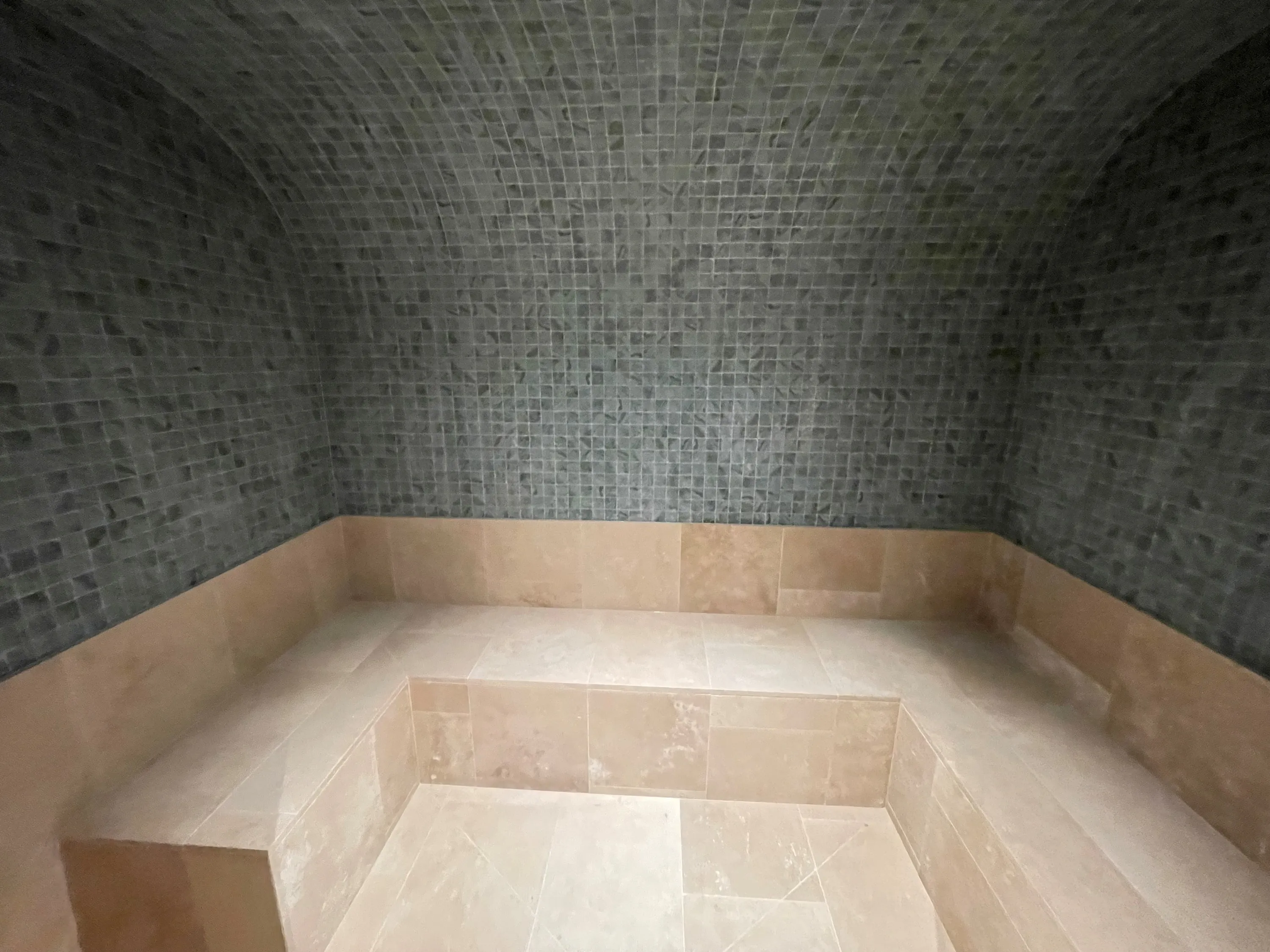
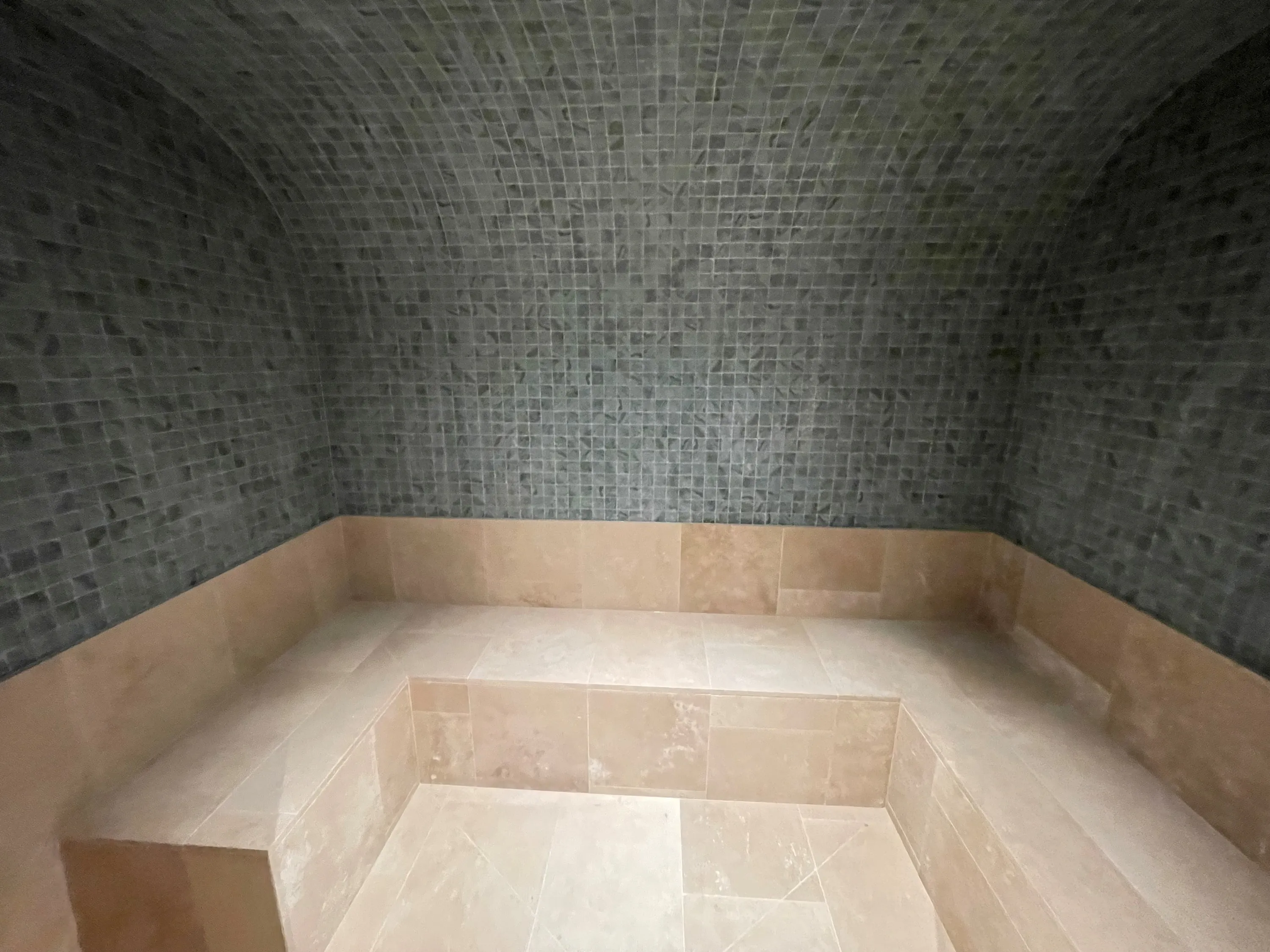
Steam rooms within bathrooms, ensuites and home wellness spaces, built properly from the structure out.
At home
A home steam room usually sits within or beside a bathroom, which makes it feel like a natural extension of the shower. But the construction is different: the walls and ceiling hold saturated air for the length of every session, so they need a vapour-control system, insulation and a ceiling shaped to shed water.
Planned early, a steam room adds very little complexity to a renovation or new build. Added late, it can mean rebuilding walls and ceilings that were never designed for it.
Planning
Room size, a ceiling height the generator can serve evenly, and a ceiling form that sheds condensation.
A dry, ventilated, accessible cupboard or room nearby for the generator — not a hot roof space.
A water supply for the generator, a floor waste in the room and a drain for the generator itself, installed by a licensed plumber.
A dedicated supply for the generator, sized by a licensed electrician to the manufacturer’s data.
Living with it
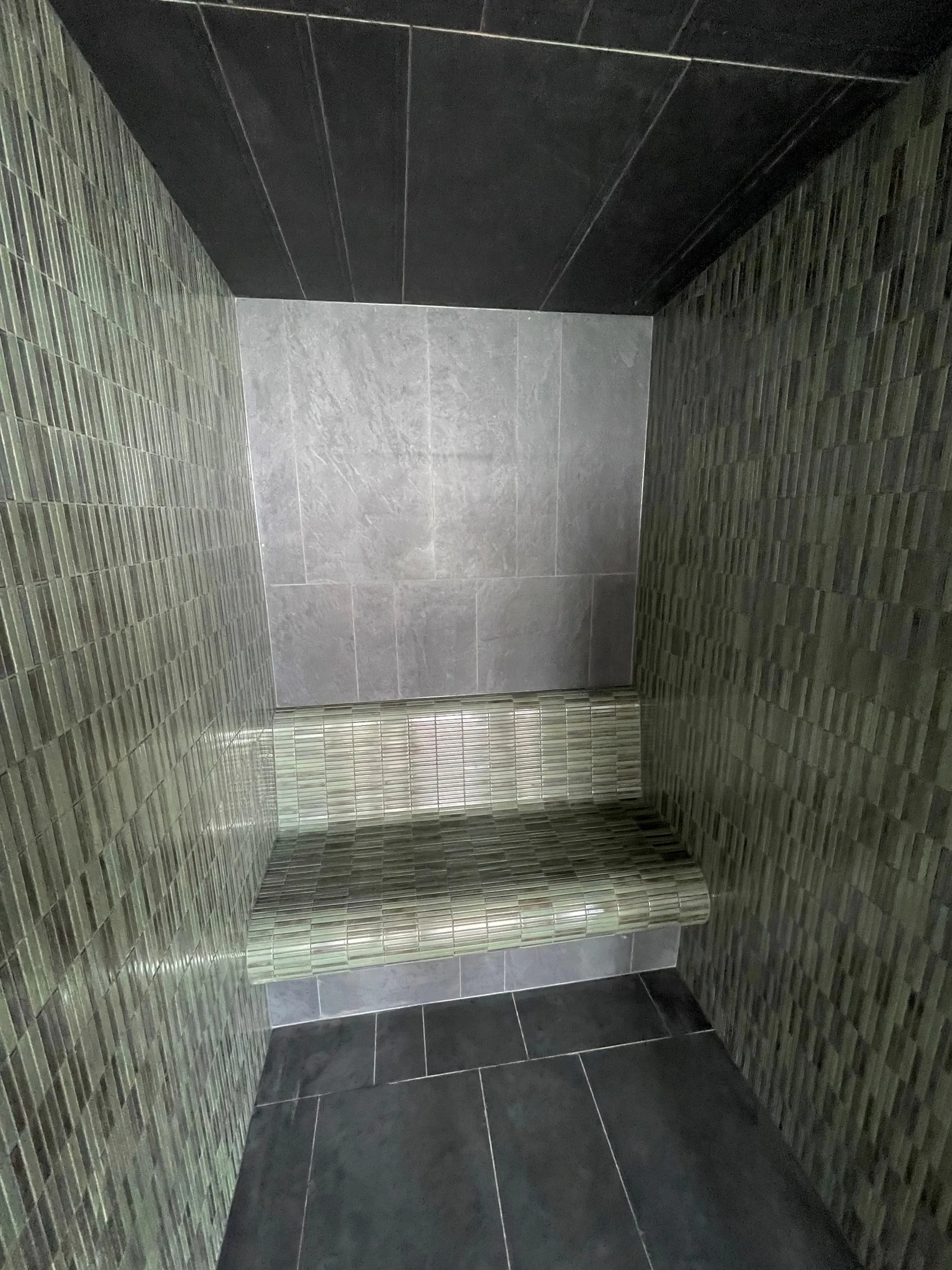
A well-built steam room needs little day-to-day attention. Drying the room, letting the generator flush itself and descaling on schedule are what keep the equipment reliable and the room free of residue.
Projects
Questions
Often, yes — a shower area can become a steam room when it is rebuilt with a proper vapour-control system, a sloped ceiling, a vapour-tight or appropriately gapped door and a generator in a nearby plant space. Adding a generator to an ordinary shower without these changes risks hidden moisture damage.
It depends on the room volume and, just as much, on what the room is built from. Stone, tile on masonry, glass and external walls all need more output than tile on an insulated board. The generator is sized from the selected brand’s own tables.
Dry the room after each use, let the generator’s automatic drain and flush cycles run, and descale at the interval the manufacturer sets for your water hardness. Where the water is hard, a softener may be recommended.
For a small space it can be, but it is a different product. A steam shower column mounts on the wall of a shower enclosure and makes its own steam; a steam cabin is a freestanding enclosure with steam built in. Both are rated for small volumes: Harvia’s 2 kW Nova steam shower column, for example, is rated for a steam space of 2–4 m³, and its installation instructions require hot and cold water connections and a floor drain in the space. Harvia describes that column as having a built-in water filter cartridge, and its manual notes that limescale builds up in the steam generator at a rate that depends on local water hardness, so descaling follows the manual for the model. A built steam room is sized from the room’s volume and finishes, has its generator in a separate plant space, and is constructed from the structure out to hold saturated air for the whole session. Whichever you choose, the enclosure must be suited to steam, and a licensed plumber and electrician confirm the connections to the manufacturer’s instructions.
Steam shower or dedicated steam room?Further reading
Tell us about the bathroom or space you have in mind. We will explain what is involved and how it fits with your renovation or build.